The Oral Mechanobiology laboratory of the Institute of Biological and Medical Engineering (IIBM) held a scientific symposium to discuss technological and methodological advances in the study of biological systems, during which a new state-of-the-art correlative atomic force microscopy (AFM) system was presented in collaboration with Professor Nelson Barrera of the Faculty of Biological Sciences.
The main focus of the activity was to explore the most recent applications of this technology, which allows the analysis of mechanical and structural properties of biological samples at the nanometer scale. In particular, the correlative approach of the AFM system presented opens new possibilities for integrating information obtained from different imaging techniques, allowing a deeper understanding of complex phenomena in biology and medicine.
During the conference, the main challenges and opportunities in the use of AFM to answer relevant research questions were discussed, especially in areas such as mechanobiology, cell biology and tissue studies. In this context, the potential of this tool to contribute to the understanding of fundamental processes, such as cell adhesion, the mechanical response of cells to their environment and the structural changes associated with different pathologies, was highlighted.
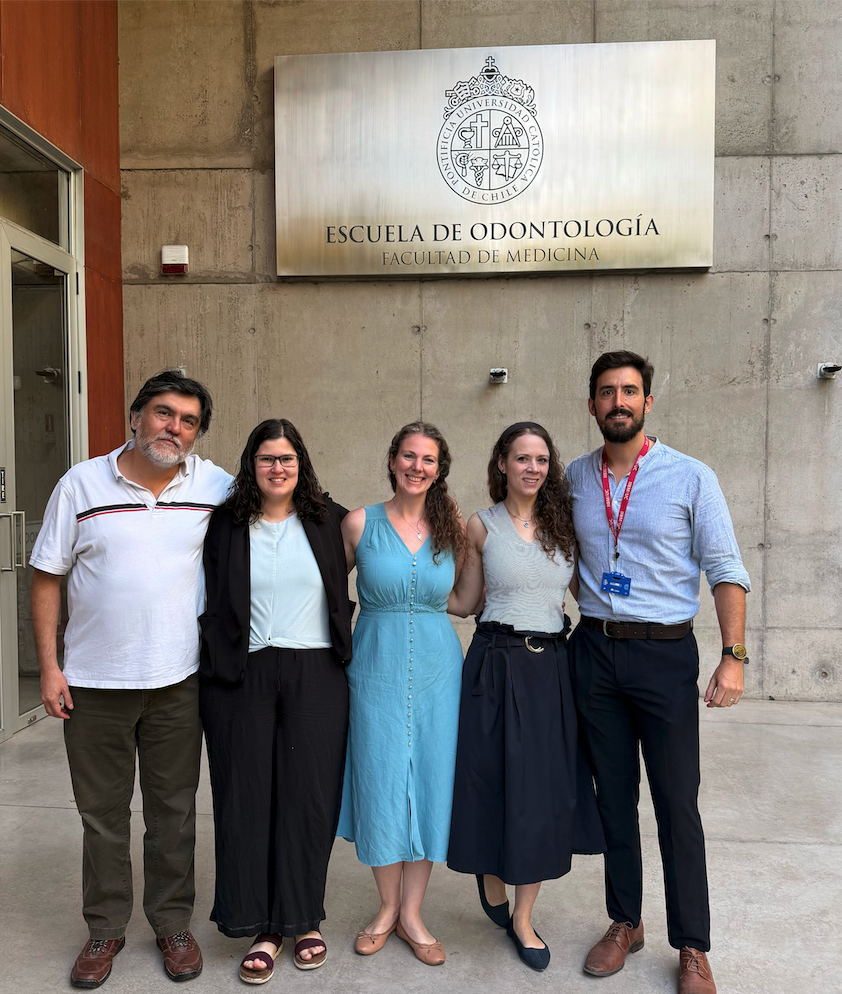
The symposium was attended by national and international academics, who shared their experiences, advances and perspectives on the implementation of AFM in various lines of research. Through presentations and discussion spaces, an interdisciplinary dialogue was generated that allowed contrasting approaches, methodologies and results, enriching the collective understanding of the state of the art in this area.
The event also facilitated the exchange of best practices in the use of advanced characterization technologies, promoting collaboration between research groups and strengthening scientific networks both nationally and internationally. This type of meeting is key to promote the development of frontier research, especially in disciplines where the integration of physical, biological and computational tools is fundamental.
The incorporation of this new AFM system positions the Oral Mechanobiology laboratory as a relevant actor in the development of research in mechanobiology and bioengineering, expanding its experimental capabilities and opening new opportunities for the generation of knowledge with impact on health.
In this way, the symposium not only made it possible to showcase the technological capabilities of the laboratory, but also to consolidate a scientific meeting space that fosters interdisciplinary collaboration and the advancement of research in key areas for the understanding of complex biological systems.