Another major success: IIBM was awarded 6 out of 6 Fondecyt Regular projects, with a 100 percent success rate
26 de January de 2024
This record represents the securing of significant funding to continue conducting high-level research, as well as recognition of the Institute’s excellence; its valuable contributions reflect the successful outcomes of the interdisciplinary approach taken by a center that brings together scholars who stand out for their experience, expertise, and collaborative work.
The IIBM kicked off 2024 with an exceptional achievement, as last week, the National Agency for Research and Development (ANID) announced the results of the 2024 Fondecyt Regular call for proposals, during which we were proud to learn that our Institute was awarded 6 out of 6 Fondecyt Regular projects, achieving a 100 percent success rate.
“This remarkable success demonstrates the Institute’s commitment to pioneering research in biological and medical engineering. Furthermore, our interdisciplinary approach drives innovation by bringing together outstanding and highly motivated scholars from diverse fields who prioritize collaboration, fostering a culture that encourages teamwork and excellence in research. This achievement is a testament to the collective dedication of the IIBM community, and we are excited about the many innovations and discoveries that lie ahead,” said René Botnar, Director of our Institute.
The awarding of these six projects will provide significant financial support for research, the acquisition of equipment, and the recruitment of talent for the research teams, enabling the IIBM to continue exceeding high standards of quality and relevance in the field of biological and medical engineering.
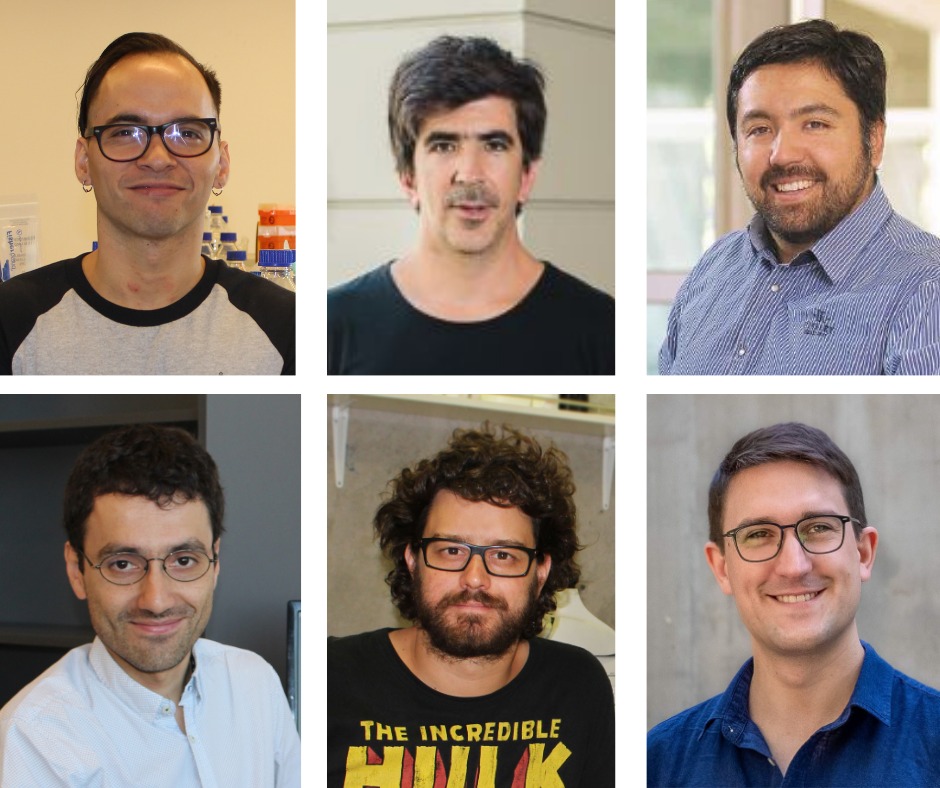
Learn more about the initiatives led by professors César Ramírez, Fernán Federici, Mario Vera, Rolando Rebolledo, Tomás Egaña, and Tobias Wenzel.
"Coevolution and frustration as molecular drivers encoding fold-switching behaviors in natural and de novo designed metamorphic proteins”
Principal Investigator: César Ramírez.
Term: 4 years
This project, led by Professor César Ramírez, aims to understand the evolutionary origin and the dependence on local constraints of the functioning of metamorphic proteins—which can switch between very different structures and functions—in order to gain an in-depth understanding of the molecular mechanisms responsible for their conformational changes. Understanding the evolution of these proteins and the specific amino acid residues responsible for these changes would make it possible to design them on a computer using artificial intelligence.
“We are very pleased to have been awarded this project, as there are few research groups in Chile working on protein evolution, and particularly on metamorphic proteins. The progress we have been making in this area has been very well received internationally; furthermore, the prediction and design of metamorphic proteins remains very difficult to achieve today and constitutes one of the major challenges in protein design,” said César Ramírez.
“Phase Transitions in Coupled Gene Networks”
Principal Investigator: Fernán Federici.
Term: 4 years
The goal of this initiative, led by Professor Fernán Federici, is to understand how spatial patterns form in cell communities based on the forces of interaction between cells and the global contexts in which these colonies are growing. The project uses well-known models from physics combined with synthetic biology to create artificial genetic systems that capture the mechanisms studied in these models.
The aim is to conduct this research on complex phenomena using a simple experimental design, which will enable other molecular biology or microbiology laboratories to replicate the study and contribute to this line of research.
“This initiative allows us to address questions regarding the spatial organization of coupled genetic networks, and we’re doing so through a simple, controllable synthetic system that gives us greater control and depth of analysis, in search of generic mechanisms that can provide clues for understanding the spatial organization of less controllable natural systems such as tissues or biofilms,” said Fernán Federici.
“Physical Heterogeneity in Biomining Biofilms: Toward Understanding Extracellular Polymer Production and the Role of Diffusible Signal Factors”
Principal Investigator: Mario Vera.
Term: 4 years
Biomining biotechnologies use strictly acidophilic bioleaching microorganisms that oxidize the iron and/or sulfur in metal sulfides (MS), releasing metals such as copper. In this context, the goal of this project, led by Professor Mario Vera, is to understand the heterogeneity of biofilms formed by acidophilic microorganisms, with the aim of genetically engineering these bacteria. This will enable their future use in synthetic biology.
If successful, the team would become the first to develop a reproducible method of genetic transformation for these microorganisms, which would pave the way for new projects.
"This interdisciplinary project will use genomics, molecular biology, and large-scale image analysis to understand genetic transformation systems, biofilm formation, and the biosynthesis of biopolymers. The project is based at the IIBM and will provide training opportunities for the institute’s undergraduate, master’s, and doctoral students, as well as enable the hiring of technical support staff,” explained Mario Vera.
"Portal flow modulation and liver growth factors to induce ex situ regeneration of the liver"
Principal Investigator: Rolando Rebolledo.
Term: 4 years
The objective of this project, led by Professor Rolando Rebolledo, is to study and describe the influence of portal pressure, hepatic growth factors, and epidermal growth factor on the induction of the initiation phase of liver regeneration in the context of an ex situ animal model as a potential approach to donation for liver transplantation.
The results obtained from this project are expected to provide critical insights into the mechanisms of liver regeneration and their reproducibility under ex vivo conditions.
“This project is a major boost for our laboratory, as it allows us to expand the number of people involved in it and also to further develop the IIBM’s applied research areas,” said Rolando Rebolledo.
"Enhancing the biomechanical properties of osteoporotic bones through the local induction of ectopic cartilage formation within the bone’s intertrabecular space: A proof-of-concept study"
Principal Investigator: Tomás Egaña.
Term: 4 years.
Professor Tomás Egaña is leading an innovative project aimed at reducing the risk of fractures in patients with osteoporosis through the local implantation of autologous tissue. This approach aims to improve the biomechanical properties of bones, seeking a new therapeutic alternative for people affected by this condition.
Miguel Urrutia, a biologist and doctoral student in the School of Biological Sciences at the Pontifical Catholic University of Chile, will be one of the key figures responsible for implementing and coordinating this project. The initiative will be carried out in collaboration with other academics from the Catholic University, including Professors Rodrigo del Río (FCB) and Francisco Sahli (IIBM). In addition, orthopedic surgeons Dr. Luis Irribarra and Dr. Pablo Besa from Christus-UC Hospital, and Professor Sebastián San Martín from the University of Valparaíso will participate.
Tomás Egaña highlights the importance of this initiative: "This is a very significant project for our laboratory, as it is the third Fondecyt Regular grant we have been awarded. It will allow us to continue exploring new lines of research to develop new therapies, as well as to acquire new equipment, improve our infrastructure, and establish collaborations both within the IIBM and with other professionals inside and outside the University."
"Advancing the Study of Host-Pathogen Interactions: A High-Throughput Droplet Microfluidic Method for Gastric Organoids"
Principal Investigator: Tobías Wenzel.
Term: 4 years
This project will investigate, through the development of methods using gastric organoids, how human tissues interact with the bacterium H. pylori, one of the causes of the high incidence of gastric cancer in Chile.
To this end, with the help of Carolina Serrano, a co-investigator on the project, we will grow the organoids in a rapid and reproducible manner, which will enable us to develop and apply a high-throughput droplet microfluidics method to improve the experimental study of host-pathogen interactions between gastric organoids and H. pylori. In addition, together with co-investigator Birger Seifert, we will advance noninvasive measurement techniques (Raman spectroscopy) using laser pulses to study these interactions.
“It’s essential for our team to have access to this funding, since we have many ideas, and this will allow us to carry them out.” “We’re open to welcoming doctoral students to participate in this exciting research,” explained Tobias Wenzel.