Reclone will deliver starter kits to more than 130 people in 13 countries in the region
6 de May de 2026
.
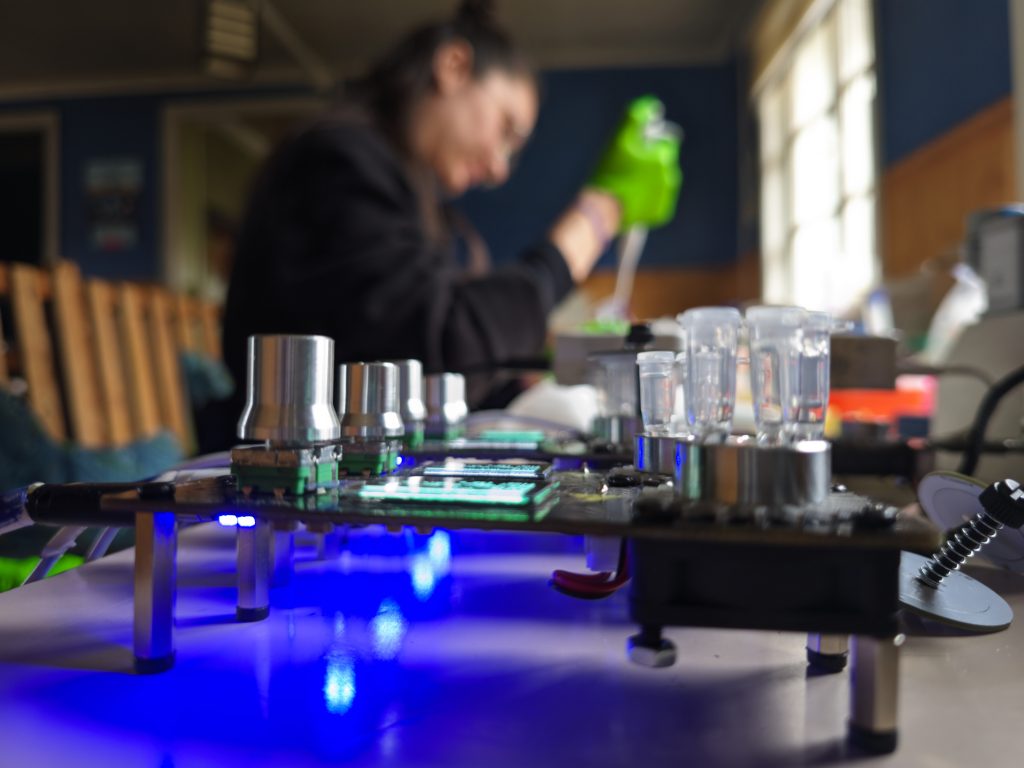
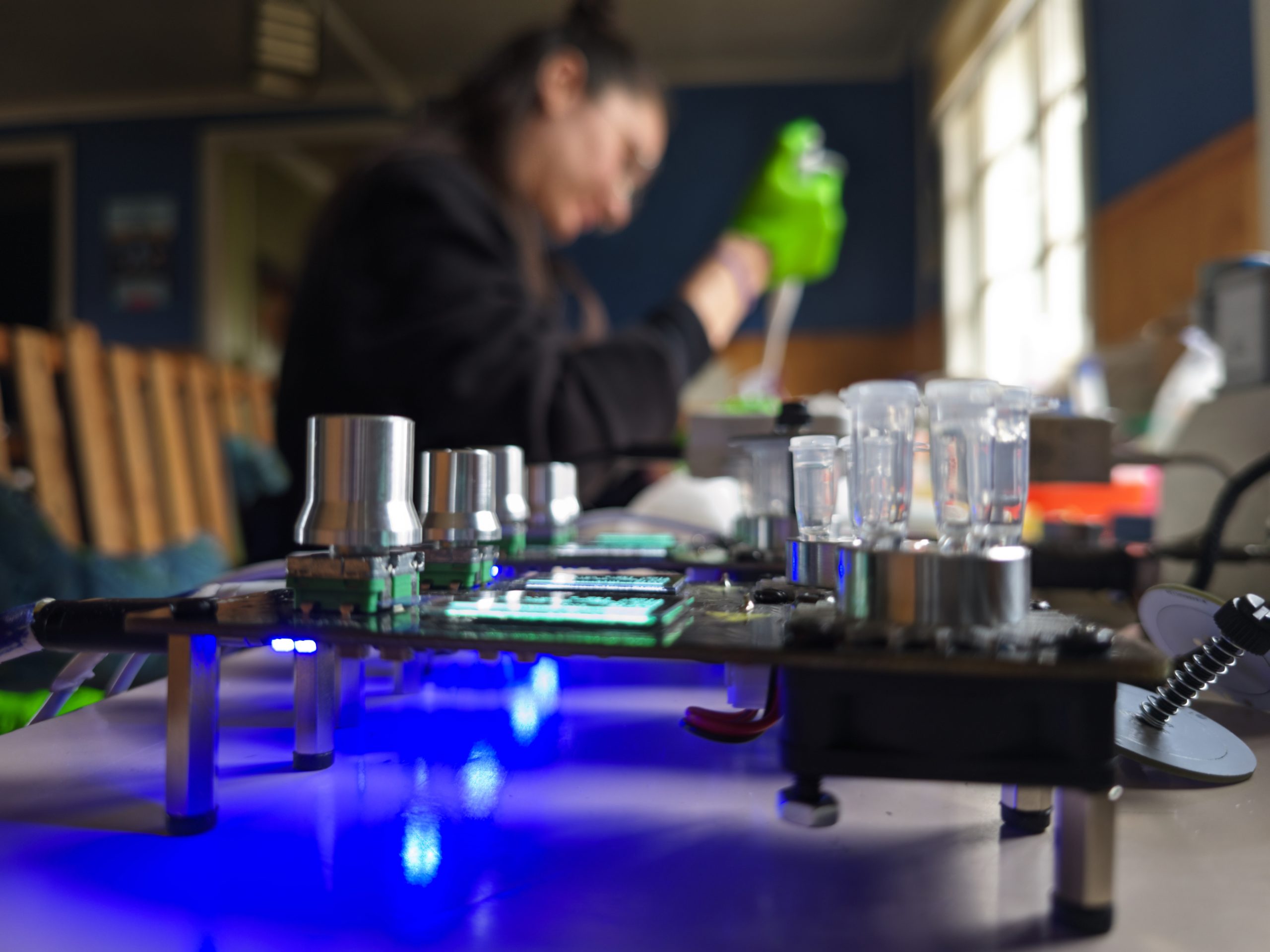
📷 Representative image of reaction preparation using open reagents and open hardware devices, here the PocketPCR (GaudiLabs) used to make PCR reactions for DNA amplification (In the background Valentina Ferrando, photo taken by Alejandro Aravena).
.
With the aim of democratizing access to molecular biology tools and strengthening scientific capabilities in the region, the international network Reclone -Reagent Collaboration Network- will promote the distribution of 150 starter kits in Latin America, benefiting 132 researchers from 13 countries.
Reclone is an initiative co-founded by the Open Bioeconomy Lab of the University of Cambridge and the Free Technologies Laboratory of the Pontificia Universidad Católica de Chile, which seeks to overcome cost and logistical barriers to access to biological reagents. Through the design, synthesis and free distribution of public domain genetic tools, the network has managed to reach more than 50 countries, train more than 250 people and generate more than 400 genetic pieces, attracting the attention of international organizations such as the IDB, UNESCO and leading scientific publications.
In this context, the new call -focused exclusively in Latin America- will allow the delivery of kits for the expression of essential enzymes and molecular biology tools for free use. These resources will be provided free of charge to selected participants and shared under the OpenMTA agreement, promoting an open science model based on collaboration, decentralization and sustainability.
The implementation of these kits is carried out in collaboration with reference institutions in the region, including the Universidad Nacional de Cuyo (Argentina), the Universidad Peruana Cayetano Heredia (Peru), the Universidade de São Paulo (Brazil) and the Instituto de Ingeniería Biológica y Médica of the Universidad Católica de Chile.
.
Democratizing access to biotechnology
.
Valentina Ferrando, research assistant at the IIBM, explains that the main objective of the initiative is "to provide access to open molecular reagents to laboratories in Latin America, especially proteins and enzymes routinely used in molecular biology, access to which is often limited by high import costs and logistical restrictions.
Along the same lines, Severine Cazaux, a doctoral student at the IIBM, emphasizes that "providing open DNA alternatives and protocols for local production reduces costs and increases the autonomy of laboratories, particularly those with less infrastructure or focused on teaching.
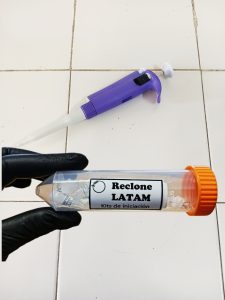
📷 Reclone starter kit, contains tubes with each of the DNA imparted. Photograph by Vanessa Gaona Guamán.
.
An expanding collaborative scientific network
.
The call gathered 132 participants from Argentina, Bolivia, Brazil, Colombia, Costa Rica, Ecuador, Guatemala, Mexico, Panama, Paraguay, Peru, Uruguay and Chile, ranging from undergraduate students to established researchers. The selection mainly considered the availability of basic infrastructure and commitment to the open materials transfer model.
In Chile, the kits will be distributed throughout the country, from the Atacama region to Coyhaique, including cities such as San Felipe, Valparaíso, Concepción, Valdivia and Santiago.
The kits contain DNA plasmids and protocols that allow the local production of key proteins, such as polymerases and retrotranscriptases, used in techniques such as PCR and LAMP. In addition, they incorporate innovative methodologies that facilitate their use even in laboratories with limited infrastructure, broadening their scope in both research and teaching.
.
Capacity building and scientific community
.
As part of the accompaniment of the selected teams, there will be a follow-up through interviews and collaborative spaces, as well as a face-to-face workshop in Chile during July, oriented to the practical implementation of the kits and the use of low-cost protocols.
In addition, the Reclone forum and the availability of open protocols allow the continuous exchange of knowledge and experiences among participants, fostering an active and collaborative scientific community.
This initiative is part of a long-term effort to build a more equitable, distributed and resilient research infrastructure, promoting the local production and circulation of biological materials. In this way, Reclone contributes to the development of biotechnological sciences in Latin America, advancing towards a more inclusive and sustainable model for the generation of knowledge.
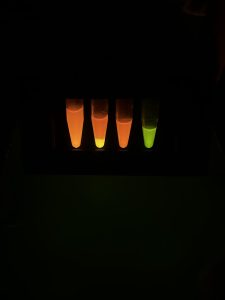
📷 Images of the fluorescent proteins included in the starter kit, used in a protein purification practical. Photograph by Valentina Ferrando