IIBM alumnus on his way to Harvard and MIT after innovating in cancer detection
27 de April de 2026
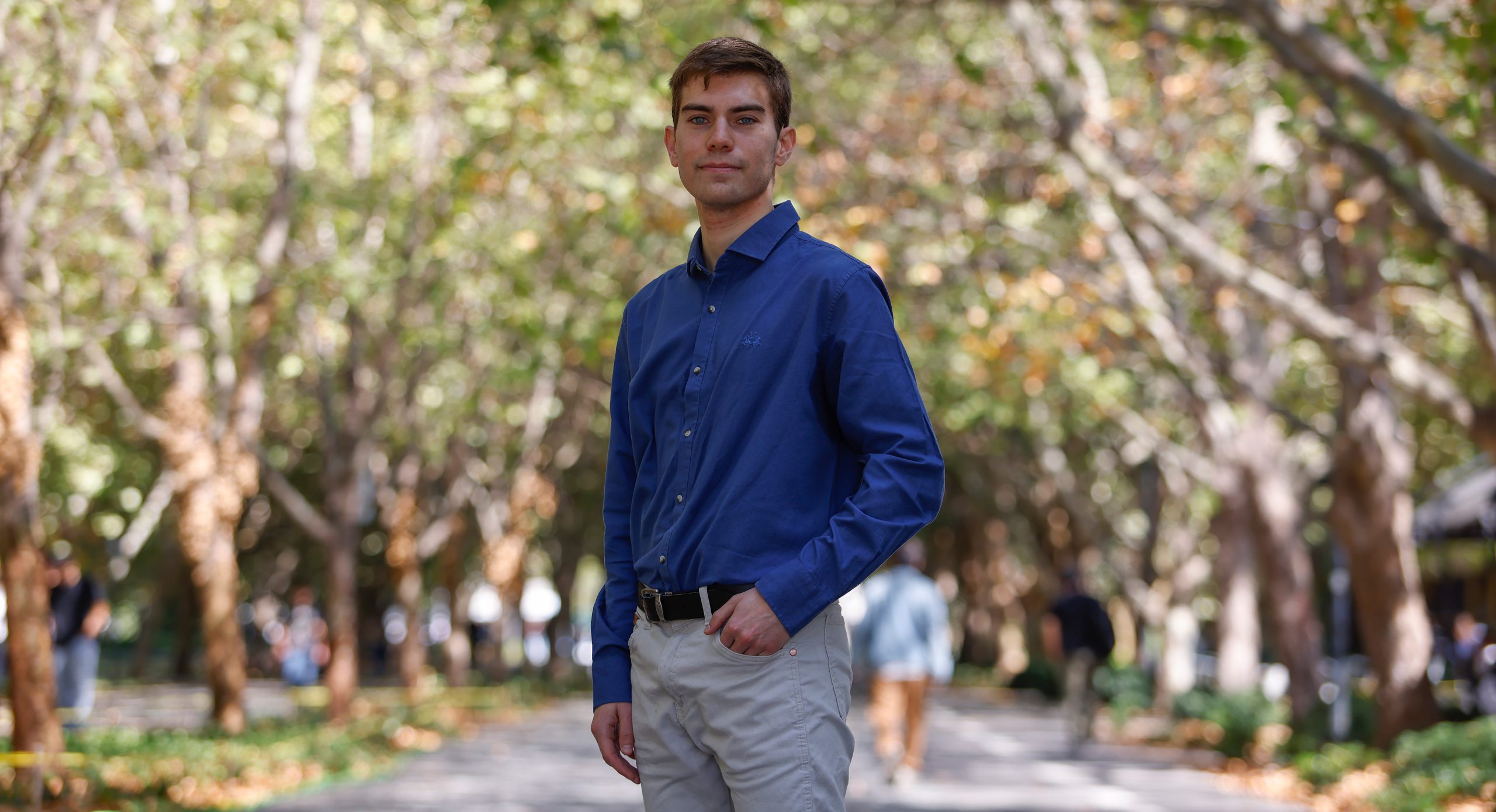
Maximiliano Mariné, who simultaneously studied Medicine and Engineering at UC, is one of the 20 selected, among 900 applicants worldwide, to enter the renowned doctoral program in Health Sciences and Technology offered jointly by Harvard and MIT.
Mariné began his medical studies at the Pontificia Universidad Católica de Chile in 2020. A year later, he decided to complement his training by adding Engineering, driven by a concern that had been with him from an early age: how to address, through technology, the existing limitations in medicine.
During his time at university, this interest was translated into concrete projects. She participated in research aimed at breast cancer detection and led the development of SNIFF, a device capable of identifying tumor margins in real time. This innovation has the potential to optimize treatments and reduce the recurrence of the disease, and was widely recognized last year.
At the age of 24, Mariné has now reached a new milestone: her admission to the PhD in Health Sciences and Technology, a joint program between Harvard University and the Massachusetts Institute of Technology. This opportunity not only validates her talent, but will also allow her to join one of the most advanced environments in biomedical innovation worldwide. As he says, it is a space where the focus is on generating concrete changes, highlighting his interest in learning and collaborating in a dynamic environment.
He also emphasizes that access to this type of program is not impossible. In his opinion, the first step is to dare to apply, demystifying the idea that these opportunities are out of reach and encouraging to project careers with international projection.
During his undergraduate studies, he worked with students and academics on several technological innovation projects. One of his first developments, linked to the textile industry, sought to improve the classification of materials for recycling by analyzing the gases generated in their combustion. Although the initiative did not prosper, it marked a key point in his training.
Thanks to this project, he had the opportunity to complete an internship in Boston, where he was inserted in an innovation ecosystem. Subsequently, he completed three other internships at the Wellman Laboratory for Photomedicine at Massachusetts General Hospital. These international experiences led him to continually rethink the focus of his research, orienting it towards concrete problems relevant to Chile.
Some time later, during a rotation in oncological surgeries, a detail caught his attention: the smoke generated by the tissues when they were operated with electrosurgical scalpel. This reminded him of his previous experience with textile materials and led him to think that these gases might contain useful information.
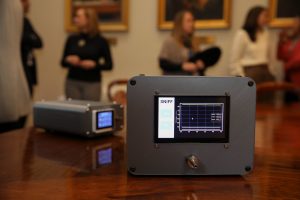
Based on this idea, he formed an interdisciplinary team with students from Engineering and Health Sciences: Felipe Andrade, Ignacio Moscoso, Rosario Willatt and Javier Castro. After months of work, they developed the first SNIFF prototype (Intraoperative detection of breast cancer margins by electrosurgical gas analysis and artificial intelligence), which would later be followed by two others.
The device delivers accurate information to the surgeon during the operation, facilitating real-time decisions, reducing the likelihood of incomplete resections and avoiding additional surgeries.
As Mariné explains, SNIFF makes it possible to detect, by means of volatile organic compounds present in the gases released by the intervened tissue, the existence of tumor margins in the breast. This contributes to improving both the detection and treatment of breast cancer, as well as reducing its recurrence.
Her motivation to work in this field has a personal origin: her grandmother died of this disease, after a relapse associated with difficulties in its detection.
The various projects in which he has participated, including SNIFF, have earned him recognition in national and international competitions such as Novartis Cancer Challenge, BRAIN Chile and the Harvard Health Systems Innovation Hackathon Global Stage, among others. His academic performance, the support of mentors, his leadership and his interest in developing accessible and relevant solutions to the local context led him to seek opportunities abroad.
From the UC, his training was accompanied by professors who marked his path. One of them is Vicente Parot, academic of the Institute of Biological and Medical Engineering, who has been his mentor in research and teaching. Parot highlights his achievements and commitment, qualifying him as an exceptional student.
In 2025, Mariné approached the EducationUSA offices on the San Joaquín campus, also motivated by the experience of his professor, who did his doctorate in Boston. In his search for programs in line with his interests, he found the joint doctorate between MIT's School of Engineering -ranked as the best in the world according to QS 2026- and Harvard Medical School, ranked fifth in the same ranking.
The Health Sciences and Technology program is characterized by its high demands both in admission and in its development. According to Hannah Stewart, an EducationUSA advisor who accompanied him in the process, Mariné is the fourth Chilean to be admitted. Each year, more than 900 students apply, and only 20 are selected.
Parot describes Boston as a top-notch biomedical innovation hub, where Mariné will be able to interact with research at its most advanced stage. He emphasizes that the environment offers a great diversity of topics, constant collaboration among scientists and a highly stimulating environment for his doctoral training.
The program provides full funding during the first year, with subsequent continuity through participation in research and academic projects.
Mariné expects to begin this new phase in September. His objective in the United States is to continue developing technologies that, in addition to being effective, are accessible. In his words, the fact that a solution works does not guarantee its applicability in all contexts, so he considers it essential to advance in innovations adapted to realities such as the Chilean one.