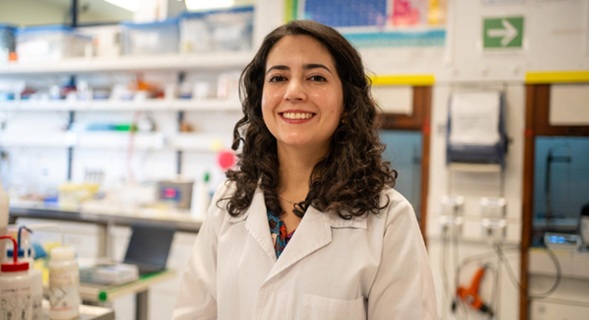
IIBM Biological and Medical Engineering PhD student stands out globally in international contest “Thesis in three minutes”.
21 de January de 2026
Organized by the academic university network Universitas 21 (U21), the competition brings together young scientists from more than 18 countries, who present their research results in a clear and accessible way to connect scientific knowledge with society.
Durán reached this important achievement after winning the national stage of the competition, organized by the Graduate School of the Catholic University, where his presentation allowed him to represent Chile in the world final.
The project with which she was highlighted is entitled "Microscopic wonders: illuminating blood disorders with nanotechnology", and addresses a technological innovation to improve the diagnosis of Thrombotic Thrombocytopenic Purpura (TTP), a severe and rare hematological disease that can be life-threatening for patients. Using specific nanoparticles, Francisca proposed a method that allows early detection of alterations in the key enzyme related to this clinical condition, which could translate into faster and more accessible diagnoses compared to traditional methods.
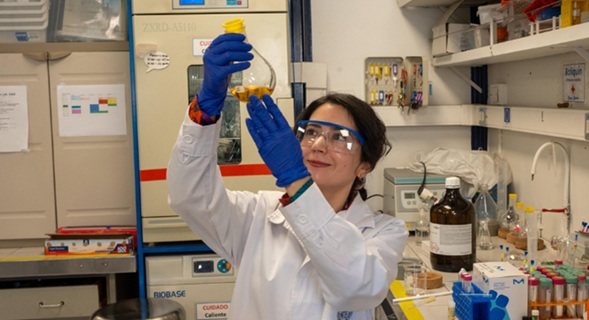
"Receiving this recognition from the public is a great motivation to continue promoting my research and strengthen my scientific skills," said Francisca Durán after learning the results of the competition.
This award -which is granted through a global vote- includes an economic stimulus and ratifies the capacity of Chilean science to generate impact beyond the laboratories. It also ratifies the importance of researchers developing communication skills that allow them to link their work with non-specialized audiences.
The international event was attended by participants from various universities and fields of knowledge, where creativity and clarity in explaining complex topics were key factors for the recognition of the presentations.