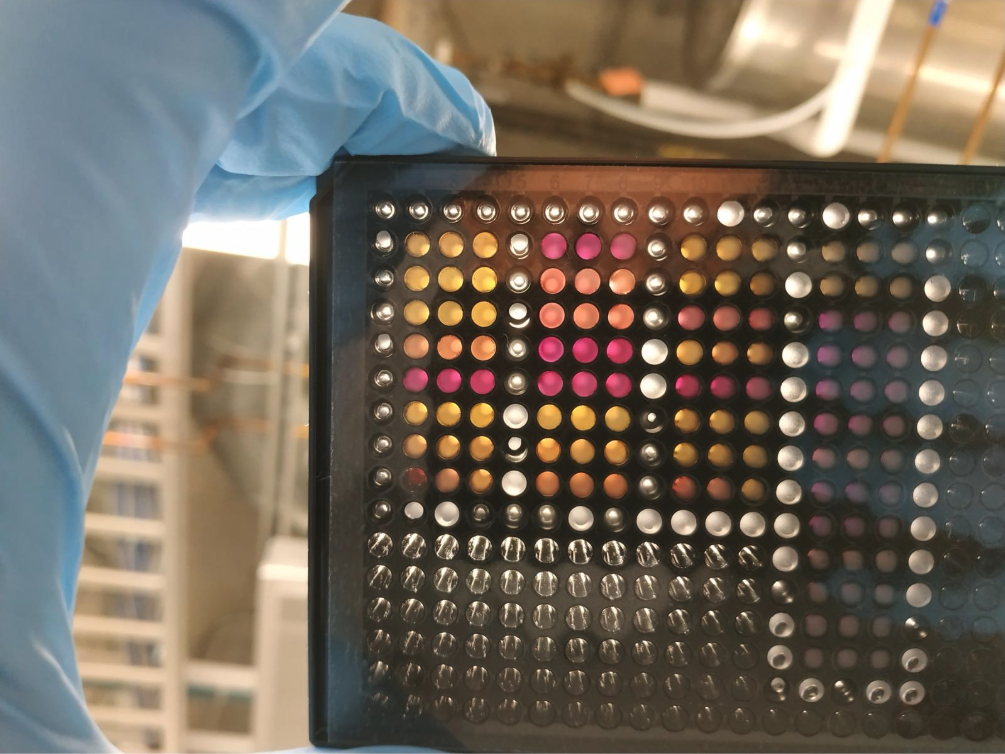
Science Advances highlights IIBM PhD research on cell-free biomanufacturing and equitable access to health care
29 de May de 2026
An international research team made up of collaborators from Canada, Chile, the United States, Colombia, India and Brazil is developing an innovative decentralized biomanufacturing platform that aims to bring biotechnological and biomedical tools directly to the places where they are most needed.
The initiative proposes an alternative to the traditional centralized production model, using cell free technologies and open source hardware to manufacture biological reagents locally, quickly and affordably, even in environments with limited infrastructure.
The project is based on the use of freeze-dried cell extracts - described by the team as a kind of "instant soup powder" - that can be stored and transported at room temperature and then rehydrated and used in the synthesis of proteins and biological reagents in situ. This technology allows tools such as molecular diagnostics, enzymes, growth factors and even vaccines to be produced locally, without relying on complex cold chains or advanced laboratory infrastructure.
The research arises in response to a persistent problem in the global health and biotechnology arena: the gaps in access to biomedical research, diagnostic and production capabilities, particularly in historically underserved communities and territories. Although these limitations were especially exposed during the COVID-19 pandemic, the challenge remains a reality in numerous contexts around the world.
In this scenario, the project proposes a paradigm shift, betting on community-driven solutions aimed at strengthening local autonomy in the production of critical biotechnological resources.
The platform was implemented at ten globally distributed sites and supported the development and validation of tools targeting pathogens of international relevance, including SARS-CoV-2, chikungunya and Oropouche virus. The results demonstrated performance comparable to commercial standards, but at considerably lower costs.
"Implementing local cell-free reactions reduced costs by about two orders of magnitude with respect to commercial standards, which has a significant impact on prototyping and development of resources that respond to local needs," explained Anibal Arce.
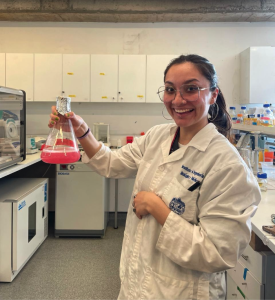
In addition to its biomedical and diagnostic applications, the technology has opened up new opportunities in training and scientific education. Thanks to the stability and ease of transport of the freeze-dried extracts, the team has been able to develop workshops and training activities both in Santiago and in other regions.
"The use of these freeze-dried extracts has also allowed us to develop new educational workshops that we have been able to implement both in Santiago and in other regions, thanks to the fact that they can be transported at room temperature over long distances," said Valentina Ferrando.
Currently, the team is also projecting new applications for this technology in environmental contexts and remote territories. One of the most recent lines seeks to use cell-free biofabrication platforms to monitor environmental pathogens in areas of the Chilean sub-Antarctic region.
Beyond its technical advances, this research represents a commitment to a more inclusive, collaborative and decentralized biotechnology, where innovation can transcend geographic and economic barriers. The project seeks to strengthen the capacity of communities to respond more autonomously, rapidly and equitably to global health challenges.
"From this work, our team is now applying this new form of biofabrication for environmental pathogen monitoring in remote sub-Antarctic areas. is now applying this new form of biofabrication for environmental pathogen monitoring in remote areas of the sub-Antarctic region: we use it to produce in situ molecular diagnostics without the need for cold chain or laboratory infrastructure," he said. or laboratory infrastructure,commented Séverine Cazaux, co-first author of the study.
From the Institute of Biological and Medical Engineering (IIBM), this work reflects the value of interdisciplinary and international collaboration to address complex problems in health, science and technology, driving solutions with global impact and concrete applications for communities in different contexts.